• Home
  • About Tracy
  • Contact Me

Using Time Wisely

Organized to save money, energy, and time

  • Email
  • Facebook
  • Pinterest
  • RSS
  • Twitter
  • YouTube
  • Document Organization
    • Overview
    • Box 1
      • Credit Report/Cards
        • Credit Reports
          • Credit Updates
          • Credit Scores
        • Credit Cards
      • Personal
      • Home Ownership
      • Vehicles
    • Box 2
      • Life Insurance
      • Major Medical
      • Tax-Favored Programs
      • Prescriptions
      • Dental & Vision
      • Special Health Policies
      • Short-term Disability
      • Long-term Disability
      • Personal Insurance
    • Box 3
      • Social Security Documents
      • Retirement
      • Investments
      • Estate Planning
      • Tax Records
  • Household
    • Cleaning
    • Maintaining
    • Organizing
    • Scheduling
      • Laundry
  • Event Planning
    • Assisting
    • Attending
    • Coordinating
      • Birthday Party
      • Christmas
      • Dinner Party
      • Fall Festival
      • Field Trip
      • Lemonade Stand
      • Thanksgiving
    • Learning
    • Preparing
    • Serving
  • Miscellaneous
    • Communication
      • Customer Service
      • E-mail
      • RSS Feed Reader
    • Goals
    • Organization
    • Time Management
      • To Do List
  • Food
    • Food Prep
    • Grocery Shopping
      • Lists
      • Pricing
    • Menu Planning
    • Recipes
    • Stockpile
  • Family Activities
    • Going Out
      • Free Outings
      • Inexpensive Outings
      • Summer
    • Rewards
      • Good Grades
      • Reading
      • Summer Reading
    • Staying at Home
  • Stretching Your Dollars
    • Daily Deals
      • Groupon
      • LivingSocial
    • Drugstores
      • CVS
    • Gas Prices
    • Gifts
    • On-line Shopping
    • Pictures
    • Products
    • Restaurants
    • School Items
    • Tips
You are here: Home / Archives for 2011

Archives for 2011

Menu Planning: Start with the Food in your House

July 28, 2011 by Tracy

Photograph Credit: Stock.xchng (Maxime Perron Caissy)

With so many web sites, blogs, and services to help plan your menu, one can quickly become overwhelmed.

Some services will make your menu for you with your shopping list. Though this would save time, those lists do not consider your local store’s sales, your family’s preferences, and what you already have on hand.

Since I have been menu planning for over 10 years, I am going to share my menu planning system that has gone through more revisions than I can remember.

When I first started menu planning, I was working full time, feeding two people, and a casual couponer, meaning I used coupons for items I routinely purchased. I planned meals that I could make quickly and my husband liked.

Looking back, I wish I could teach my younger self how to maximize those menu plans with savings, but I can’t go back. What I can do is impart to you the wisdom I have gained along my journey of mistakes, attempts, and successes.

Tracy’s Menu Planning Process

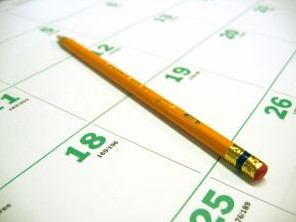
1. Choose my Tool. Last week, I shared some menu planning tools. To begin, I get my preferred menu plan which is this Monthly Menu Planner. Towards the end of the month, I will print my new calendar and add the date to each day. Since my plan only contains 4 weeks, I usually need to add a few days at the top and/or bottom to complete my month.

2. Put Tool on refrigerator door. Once the calendar has all the days assigned, I put the empty page (no meals planned) on my refrigerator door.

3. Consult my Calendar. If we are scheduled to attend a dinner, participate in a free event, or away from home, I will make a note on my menu plan. These are meals that need some different considerations. For example, if my son has a soccer game, then I will need a picnic dinner that evening; for days when we have an evening event, I may need an easy meal to clean up to assist in getting the family out of the house quickly; or, a dinner party where I have volunteered to bring a dish.

4. Go to my Freezer. Just open the chest or the door, and take a look at my options.

5. Open my Pantry. After the freezer, I check my options inside my pantry. By this time, the ideas are beginning to flow. I am thinking of meals that I can make with the ingredients on hand.

6. Assign Meals to Dates. When the ideas begin, I grab a pencil and assign a meal to a date (e.g., baked chicken, mashed potatoes, corn, and bread on Monday). I continue to add meals until I run out of ideas.

7. Put the Pencil Away. When I have added all the meals I can contrive with my on-hand ingredients, I stop. I put the pencil away. If I think of something else, I can always come back to write it down.

Menu Planning Benefits

1. Just having menu options helps me save time. When 4:00 p.m. arrives, I do not need to spend time staring into my pantry, then going to the freezer to look, and coming back to the pantry with no idea what to do for dinner. Been there? Me, too. The result is usually a phone call to Paul saying, “Do you have any ideas for dinner?” When he comes up short, we will probably be going out for dinner. Then I am using a larger portion of my food budget to feed my family this one meal where I could have spent our money better had I planned ahead.

Before the downward spiral gets out of hand with giving up on saving at the grocery store, clipping coupons, and menu planning, I need to stop and plan for tomorrow before tomorrow arrives. Just making the plan gives me a point of reference.

2. Mix and match. Remember that your menu plan is a tool. I have planned meals for a few days. If I get to Monday and I just do not feel like chicken, then I can swap Monday’s plan with Tuesday’s meatloaf plan. With a few days planned, I can mix and match the items since I have all these ingredients on hand. I am not bound by my plan. It is just a tool to help me use my time wisely and feed my family.

Using a menu plan has helped me use my time wisely. Just a few days of ideas help to keep me on track to know when to take out meat to defrost, prepare a crock pot meal, or enjoy some extra time in the kitchen teaching my kids how to cook. The menu plan is a tool that saves me money (not running to the store for a needed item), energy (back and forth from pantry to freezer searching for something to make), and time (waiting for an idea to come to me). 🙂

Question: For you, what is the hardest part about menu planning?

Filed Under: Menu Planning, Food Tagged With: menu planning

The Choice of Quality (Part 1 of 2)

July 27, 2011 by Tracy

Photograph Credit: Flickr (Nutmeg)

As I drove through my subdivision on trash day, I noticed that two more homes had piles of carpet at the curb. Since the summer began, there have been at least 3 other homes that have replaced or substituted the carpeting in their homes. Though some of them may have chosen another flooring choice, e.g. hardwood, tile, etc., some are replacing the original carpet because it is threadbare.

Making the Choices

Looking back at the choices Paul and I made at the time we built our home, I am confident we chose correctly. After selecting our floor plan and elevation choice (essentially, the look of the outside including the slope of the roof), we had 2-3 pages of upgrades to consider. The choices were a bit overwhelming until we agreed on our maximum purchase price and evaluated our options.

In making our selections, we chose quality over convenience or decoration. Our upgrades included:

  • Mud sink for the garage,
  • Large appliances,
  • Extended (tall) cabinets,
  • Fireplace with mantel,
  • Tier 2 carpet pad and carpet, and
  • Microwave with hood over the range.

All the upgrades we chose cost us less than having to remodel our house with these items. By choosing the best quality upgrades, we used our time wisely.

On a side note: One upgrade I really wanted was the matching crown molding for our kitchen cabinets. However, the price was outrageous and would have exceeded our agreed upon price. That choice also could easily be added at a later time. So, I sacrificed my heart’s desire, and by-passed that upgrade.

As the house was being built, Paul and I would stop by to watch the progress. On one occasion, we met our cabinet installer. After talking with him and thanking him for his work, this installer gave us his business card. We informed him that we were interested in the crown molding and might contact him in the future.

A few weeks later, I received a call from our builder asking us to please remove the crown molding left in the house. On our next visit to the house, Paul and I saw our crown molding. Our cabinet installer GAVE us the crown molding for our kitchen cabinets.

I cannot express the emotions I felt realizing that we chose wisely. The crown molding I desired was given to us free of charge saving us $750. What a blessing! I enjoyed writing that thank you note and am still appreciative of that gift.

The Results of the Choices

In the years we have lived in our house, all of these quality choices continue to serve us well. I am thankful we opted for the upgraded carpet pad and carpet. With continued cleaning and care, these carpets will continue to meet our needs. Though we paid more for these choices at the beginning, I am more aware of the benefits to paying a bit more for quality to save money (replacing the carpets), energy (moving everything out of each room), and time (waiting for the project to be completed) in the long run.

Next week in part 2, I will explain how our decisions of quality in other areas continue to save us money, energy, and time.

Question: What is the best quality choice you have made? Please add your answer by clicking the Leave your Comment button below.

Filed Under: Miscellaneous Tagged With: quality

Event: Arriving Etiquette

July 26, 2011 by Tracy

Photograph Credit: Flickr (Nate42)

Have you ever received an invitation with the time listed and wondered when to arrive at the event? Just because the time is listed does not necessarily mean that is the time to arrive. Let’s consider four different events:

Wedding

As you open a wedding invitation and read about the happy couple’s intention to marry on a predetermined day, you will find that the ceremony will be at said church at 5:00 p.m.  The time indicated is when the bride is scheduled to walk down the aisle. Since you will need to be seated prior to the bride’s descent, plan to arrive 15-30 minutes prior to the listed time. If you arrive at or after the listed time, you may not be granted entrance into the ceremony.

Remembering back to one ceremony Paul and I attended, we arrived 30 minutes early to find decorations still being placed and no attendees. At first, I thought I had misread the invitation. Locating the invitation in my purse, I consulted the time. The wedding was to begin in less than 30 minutes. So, Paul and I took a seat and waited. At the time listed on the invitation, the lights were dimmed and the preliminary elements began.

That event was the only wedding I have ever attended that truly began at the appointed hour. The bride made her entrance 30 minutes after the time listed on the invitation. Though it happens, this scenario is not the standard. My recommendation is to arrive between 15 – 30 minutes prior to the listed time.

Dinner Party

When you are invited to a dinner party at 6:00 p.m., plan to arrive between 6:00 – 6:05 p.m. Your host or hostess is preparing for your visit. If you have made arrangements to arrive earlier to help, then assist your hostess at the appointed time. If you have offered to help, but the hostess has not accepted your offer, then please do not arrive early.

Most hostesses have scheduled their time to have the meal prepared at the set time. If you arrive early, your hostess may not be ready and will feel the need to entertain you rather than complete her preparations. Please be considerate of your host by arriving at or a little after the time given.

Open House

Receiving an invitation to an open house event, you will notice the parameters for the time: 2:00 – 4:00 p.m. Your host or hostess is offering this event where you are welcome to arrive between 2:00 – 3:30 p.m. Give yourself a minimum of 30 minutes to interact with your host and hostess and enjoy the benefits of the event they planned.

Please do not arrive 5 minutes before the end of the event (without extenuating circumstances). Not only is this behavior rude, it is also disrespectful to your host and hostess. Since your host has taken the time to invite and prepare for your attendance, your lateness ignores the kindness extended to you. Please plan and arrive no later than 30 minutes before the end of the event.

I have attended many baby showers with an open house time frame and have found arriving too early means sitting around waiting for others. Usually I plan to arrive around the middle of the time frame. In this case, I would arrive around 3:00 p.m., allowing time to visit, participate, and exit within the framework of the event.

Birthday Party

In the invitation, the host usually sets a framework for the party. If so, then please arrive within 5-8 minutes of the scheduled time. If this party is for children, then the host or hostess probably has a planned schedule. Arriving late may cause the host or hostess to adjust the schedule to accommodate you. If you get lost or know you will be late, please inform the host or hostess of your situation.

If the invitation only lists the start time, then plan to arrive within 5-8 minutes of that time. Your host or hostess is expecting your arrival before commencing the activities.

These are just four types of events where knowing when to arrive will help the attendees as well as the host and hostess in executing a successful event. The window of time to arrive at these events is between 30 minutes prior to the appointed time and up to 8 minutes after the scheduled time. Taking note of the type of event and the etiquette associated with that event will keep you arriving within the allotted time to fully enjoy the planned activities.

For more information on party etiquette, you can visit Syndi Seid’s Advanced Etiquette. She even has an Etiquette Tip of the Month. Come back next week for etiquette on departing from these same four events.

Question:  What do you do when you arrive early to an event? To add your answer, please click on Leave your Comment at the end of this post.

Filed Under: Attending, Event Planning Tagged With: event etiquette

Cleaning: Use Both Hands

July 25, 2011 by Tracy

Photograph Credit: Flickr (atf300)

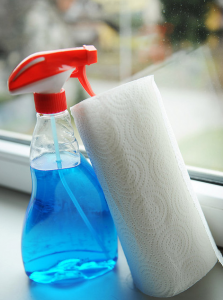
Have you ever considered how you clean? If someone asked me this question, my response would be: “Yes, I clean top to bottom and right to left.” But after watching someone else clean, I will now add to my previous answer, “with both hands.”

My Observation

Recently, I had the opportunity to observe someone clean a store’s glass windows. These windows were rather tall, and the washer was concentrating on the lower half. She kept her right hand busy with all these tasks:

  • picking up the glass cleaner bottle from her cart,
  • spraying the glass,
  • placing the glass cleaner bottle back in the cart,
  • picking up the squeegee, and
  • working the squeegee in a zigzag motion from the middle of the pane to the floor.

Though her right hand was busy, she kept her left hand on her hip without utilizing it. I kept waiting to see if she would switch hands, but she did not. She was not in any rush, for she would stop to watch customers and to rest her right arm. (That right arm must have been quite tired.)

My Response

While watching her, I was thinking how this process could be improved to use her time wisely with the least amount of effort. These are my tips:

1. Use both hands. Hold the cleaner in one hand and the squeegee in the other. When one shoulder, arm, or hand gets tired, switch those products to the other hand.

2. Stay focused. Look at the window and keep working. As you complete a section, begin the next.

3. Continue to work from top to bottom. If you start at the bottom, you will likely need to re-do some or the entire lower portion when you clean the top.

Though I do not anticipate cleaning tall windows anytime soon, I will be emptying out my dishwasher, putting away folded laundry, and stacking grocery items in my pantry. So, as I accomplish these household tasks, I plan to use both hands, stay focused, and continue to work from top to bottom.

Question: What tips or tricks have you discovered from watching someone clean well or poorly? Please share your answer by clicking the Leave a Comment link below.

Filed Under: Cleaning, Household Tagged With: cleaning

Home Ownership: Property Taxes

July 24, 2011 by Tracy

If you are following the list of items in the home ownership category, you may notice that property taxes were not included in that list. You are right!

Usually property taxes would be housed with the tax documents located in Box 3. However, after using this system for a number of years, I have found that when I need these tax documents, I look in the home ownership file first. If I don’t find it there, then I look in the tax file.

To assist me in using my time wisely, I have chosen to move the property tax documents from the tax file to the home ownership file. Making this change is my personal preference. If you would look in the tax category first, then place these documents there. Find a system that works for you that will allow you to use your time wisely.

Continuing with our filing system under the home ownership category, we have added our deed(s) and homeowner’s (or renter’s) insurance documents. Behind these documents, I have included the following property tax papers:

1. The current property tax notice. This is an annual statement sent from our county.

2. Copy of tax payment. Since this payment is made by our mortgage company from our escrow account, I make a copy of the mortgage statement showing that the taxes were paid. In the event I need to prove that the payment was made, I have the copy of the receipt with the tax notice.

3. Notices of Classification, Appraisal, and Assessment of Real Estate Tax. These documents list our home’s assessed value for tax purposes. Any countywide reassessment changes will be included on this form.

These items are organized with the current year on top and paper clipped together. (I like using paper clips rather than staples. The staples leave marks when I need to replace documents. The paper clips do come off periodically, but overall, they work great.) I then place these tax documents behind the insurance paperwork for easy access when needed.

Next week we will continue adding documents to this category of home ownership. I hope you are taking steps to getting your paperwork organized. It is a process that is worth your time and energy.

Question: Do you prefer using staples or paper clips to keep your documents together?

Filed Under: Document Organization, Home Ownership Tagged With: Home ownership, taxes

« Previous Page
Next Page »

Welcome to Using Time Wisely!


Presenting organizational tips and tricks to save you money, energy, and time.

To access 5 Ways to Using Time Wisely Today, click "like" on my facebook page and join in on the journey of Using Time Wisely.

Looking for something?

Email Newsletter

Sign up to receive email updates and to hear what's going on with us!

Copyright © 2026 · Lifestyle Pro Theme on Genesis Framework · WordPress · Log in