• Home
  • About Tracy
  • Contact Me

Using Time Wisely

Organized to save money, energy, and time

  • Email
  • Facebook
  • Pinterest
  • RSS
  • Twitter
  • YouTube
  • Document Organization
    • Overview
    • Box 1
      • Credit Report/Cards
        • Credit Reports
          • Credit Updates
          • Credit Scores
        • Credit Cards
      • Personal
      • Home Ownership
      • Vehicles
    • Box 2
      • Life Insurance
      • Major Medical
      • Tax-Favored Programs
      • Prescriptions
      • Dental & Vision
      • Special Health Policies
      • Short-term Disability
      • Long-term Disability
      • Personal Insurance
    • Box 3
      • Social Security Documents
      • Retirement
      • Investments
      • Estate Planning
      • Tax Records
  • Household
    • Cleaning
    • Maintaining
    • Organizing
    • Scheduling
      • Laundry
  • Event Planning
    • Assisting
    • Attending
    • Coordinating
      • Birthday Party
      • Christmas
      • Dinner Party
      • Fall Festival
      • Field Trip
      • Lemonade Stand
      • Thanksgiving
    • Learning
    • Preparing
    • Serving
  • Miscellaneous
    • Communication
      • Customer Service
      • E-mail
      • RSS Feed Reader
    • Goals
    • Organization
    • Time Management
      • To Do List
  • Food
    • Food Prep
    • Grocery Shopping
      • Lists
      • Pricing
    • Menu Planning
    • Recipes
    • Stockpile
  • Family Activities
    • Going Out
      • Free Outings
      • Inexpensive Outings
      • Summer
    • Rewards
      • Good Grades
      • Reading
      • Summer Reading
    • Staying at Home
  • Stretching Your Dollars
    • Daily Deals
      • Groupon
      • LivingSocial
    • Drugstores
      • CVS
    • Gas Prices
    • Gifts
    • On-line Shopping
    • Pictures
    • Products
    • Restaurants
    • School Items
    • Tips
You are here: Home / Archives for Event Planning / Coordinating

2012 Live History Fair – Part 2 of 3

June 12, 2012 by Tracy

Photograph Credit: Microsoft Images

When planning any event, organizing is the key which is the part I love. Working through the learning and gathering phases fuels my energy to the organization step. 🙂

Last week in Part 1, I started explaining my process in planning our school’s live history fair. With an understanding of the type of event and then knowing the information to present at the performance, my mind began formulating a plan.

STEP THREE: ORGANIZING

Besides my favorite part of the process, the organizing step is the core of the event. If I emerge from this step with a general idea, then I will waste time and energy re-organizing, re-delegating, and backtracking.

My goal in this step is to reach the end with a clear itinerary, program, or sketch. With this plan, I can funnel all suggestions, recommendations, and changes to fit within the framework. Having this step nailed down tightly removes confusion from the big picture.

Knowing this step’s importance, I spent the bulk of my time organizing our live history fair. I sat with a stack of blank copy paper at my dining room table, which is a large 60’ x 60’ area with lots of space. I began to jot down all the components:

    • Page 1: The list of players by group (e.g., K4 and K5 presentation, K4 and K5 music, Grade 1 presentation, Grade 2 presentation, Grade 1 and 2 music, etc.)
    • Page 2: A list of all the geography students and the area chosen for their presentations (e.g., John Doe – Bermuda, Plain Jane – Philippines, etc.)
    • Page 3: Compiled another list of the American history students with their chosen topics.

With the basic lists written, I went back to page 1 and added in the details. I included the dates of each presentation, the material used (stories, play, poem, etc.), and the titles provided by the teachers.

With all the information in front of me, I started organizing the program on separate sheets:

    • Sheet 1: Grade order beginning with kindergarten working up to the upper school students
    • Sheet 2: Alphabetical listing of titles and locations
    • Sheet 3: Date sequence beginning with the earliest date and working toward modern times

With each option, I hit a snag. The program seemed disjointed working in grade order and alphabetical order. The date sequence worked best, but I lacked true dates for the origin of countries for the geography students.

Since I was not sold on any one idea but I liked parts of each order, I chose to combine them. I used the date sequence for the presentations, the alphabetical order for the geography students, and grouped the music selections by when the students were on stage.

For variety, I interspersed the geography classes’ individual presentations and the group music selections among the group class presentations.

Once I had the program outlined, I took a break. I came back later and reviewed my options. Satisfied with this plan, I asked Paul (my sounding board) and a close friend to look it over. After getting their reaction which resulted in no changes, I forwarded the information to the teachers, staff, and volunteers and waited for the questions to come.

STEP FOUR: DELEGATING

While answering and responding to questions, concerns, and suggestions, I chose to delegate some of the tasks. This program involved more than the time spent inside the auditorium, so I needed some help. Having a list of volunteers and good friends who help, I assigned the following tasks:

    • The class presentations: lower school teachers
    • Costumes and props: parents (The teachers communicated with the parents.)
    • The music presentations: music instructor
    • Art displays: a teacher and group of parent volunteers
    • Reception: our Student Life Committee

Sneak Peak: When I got to the next step, I hit a hiccup and added transition items which I later delegated to others.

In using time wisely to execute our live history fair, I prepared by organizing alone and then delegating to others. Throughout this process, I moved forward with my planning while fielding phone calls, e-mails, and car-line chats. 🙂 With the plan in place, I stayed focused in the midst of distractions.

My plan for organizing an event may not work for you because we are different. The key to any successful event is knowing where you are going, planning how to get there, and making your path as straight as possible. Happy planning!

Question: Do you organize your ideas with pen and paper or use another method?
Filed Under: History Fair, Event Planning, Coordinating Tagged With: History Fair

2012 Live History Fair – Part 1 of 3

June 5, 2012 by Tracy

Photograph Credit: Microsoft Images

In planning to direct our school play, I stopped to adjust when this live history fair replaced the spring drama. Yikes!

In coordinating this event, I started with this six-step plan:

STEP ONE: Learning

STEP TWO: Gathering

STEP THREE: Organizing

STEP FOUR: Delegating

STEP FIVE: Presenting

STEP SIX: Executing

To explain the process, I will cover steps one and two in Part 1, then steps three and four in Part 2, and finish with steps five and six in Part 3.

This journey was a learning experience with setbacks along the way. Not every event is smooth sailing. This event definitely stretched my abilities and tapped into my creative thinking which I will begin sharing with step one.

STEP ONE: Learning

When presented with the idea of a live history fair, I’m sure I raised my eyebrows. I was thinking, “What is a live history fair?” The students already present, so how much more “live” can the program become?

Though I was leery of the idea, I listened. After a few meetings, since I did not grasp the concept the first few times, I came to understand that this event showcased “history in action.” Instead of using narrative stories or first-person accounts, the students would show through skits, plays, songs, and poems the different historical events.

With this understanding, I presented the new format to the teachers. Each class would choose a theme, material, costumes, and props for their performance. In calming the teachers and reassuring them that help was near, I offered my assistance to help formulate a plan.

STEP TWO: Gathering

After the meeting with the teachers, I followed up with an e-mail asking for details of their presentations and gave them about a week to respond.

During this time, I learned that two upper school classes, the geography students and the American History pupils, would present individually. With suggestions, I agreed to add music presentations and an art display incorporating the students’ work from the school year.

As I fielded questions and suggestions, I chose not to turn anyone away. The goal in this step was to gather all the possible pieces together. As the deadline approached, I contacted those missing elements and helped by finding a poem, making suggestions, and discovering a teacher that I missed originally. Oops!

With the information gathered, I moved on to Step Three – organizing the pieces which I will continue in next week’s event planning post.

In coordinating our live history fair, I started with learning and gathering. Getting a grasp on the concept of a live history fair helped me focus the content on reaching the goal. Working with teachers, parents, and volunteers throughout this process made my job easier. Keeping a calm atmosphere, a can-do spirit, and an open mind, I learned from others and gathered information while using time wisely on my journey to a successful live history fair.

Though you may not coordinate a live history fair, you may lead another unique-to-you event. During these times, stay calm, listen, and learn. Getting a handle on your event before adding selections, acts, booths, speakers, or other items will focus your attention before gathering the parts to your event. Take it one step at a time, and happy planning!

Question: When you plan an event, how does your sequence of planning differ from mine?

Filed Under: History Fair, Event Planning, Coordinating Tagged With: History Fair

Concluding My 2011-2012 Events

May 29, 2012 by Tracy

Photograph Credit: Microsoft Images

The 2011-2012 school year came to a close last week. The last days were bittersweet as students excitedly received recognition for their work and then tearfully said goodbye.

As with most years, we had our challenges, but overall, it was a fantastic year.

At the beginning of the school year, I shared my upcoming 2011-2012 events: Fall Festival, Christmas Program, and Spring Play.

Having posted the results of the Fall Festival and the Christmas Program, I will share some details of the last event.

Planned Events

Science Fair

Like most schools, we host a science fair and a history fair for the students. The science fair includes stations where the students display their experiments.

During a time of exploration, students share with those who visit their display how they used the scientific method to come to their conclusion.  This event gets organized by a science teacher and occurs during one school day morning.

History Fair

In past years, our history fair was also a morning program. Based on a theme (i.e., architecture, food, etc.), the students work together as a class to create a display and short presentation.

Usually coordinated by a teacher, the history fair program included a formal time for the class presentations and then time to investigate each station with friends.

Event Change

To broaden the students’ experiences with the history fair, the school officials chose to substitute a live history fair for the spring play this year. This decision occurred before investing money, energy, and time into the spring play. Honored to be part of the planning, I stepped in to coordinate.

Upon volunteering to change from directing a spring play to coordinating a live history fair, I had to get a grasp of the concept. In next week’s post, I will begin sharing my journey through learning, gathering, organizing, delegating, presenting, and executing our live history fair. Until next week, happy planning!

Question: What events have you executed this year?

Filed Under: History Fair, Event Planning, Coordinating Tagged With: History Fair

Personalized, Handwritten Thank You Notes

May 15, 2012 by Tracy

Photograph Credit: Microsoft Images

In an era of texting, social media, and e-mail, the art of sending handwritten notes is fading.

With the passing my grandmother earlier this year, I treasure her handwritten birthday cards and notes of encouragement that I kept throughout the years.

No one else writes like my grandmother and seeing her handwriting brings back sweet memories. Her investment of time to handwrite those cards and notes continues to bless me today.

Learning the Skill

Writing thank you notes has been a part of my life. As an elementary-age girl, I still remember sitting at our kitchen table and writing my thank you notes after a birthday party or Christmas season. My mom taught me how to write personalized thank you notes that I continue to do today.

Expressing my gratitude with a handwritten note is more personal than shooting off an e-mail or Facebook post. Though there are times when I do send those messages, I value the personalized, handwritten notes for special occasions.

Practicing the Skill

Spending my time writing notes shows my gratitude for the recipient’s gift. After a party, event, or gathering, I write personalized, handwritten thank you notes expressing my appreciation to all the helpers. Without others’ assistance, these events would take more money, energy, and time.

In using time wisely, writing personalized, handwritten thank you notes is a small token of my appreciation for a job well done. Happy writing!

Question: How often do you write personalized thank you notes?

Filed Under: Event Planning, Coordinating, Serving Tagged With: Notes

Blue’s Clues Birthday Party – Part 3 of 3

April 24, 2012 by Tracy

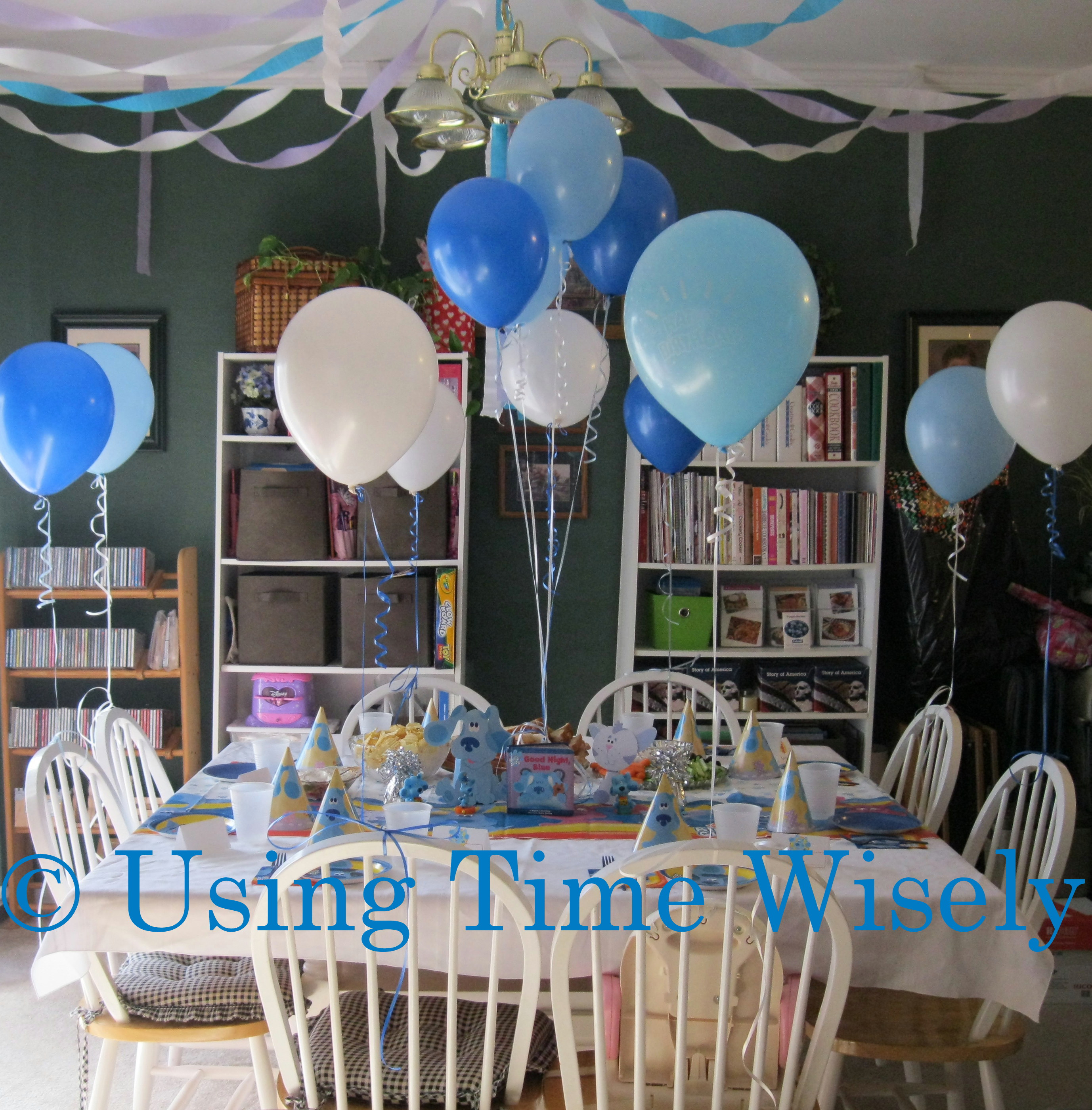
Blue's Clues birthday party

Though I plan each birthday party, I know that there will be changes. I never know how my children will react on the day of the party. Sometimes they are all in and ready to play everything while other times they do not want the attention focused on them.

Having learned from past birthday parties, I try to have a backup plan or at least another option for those moments.

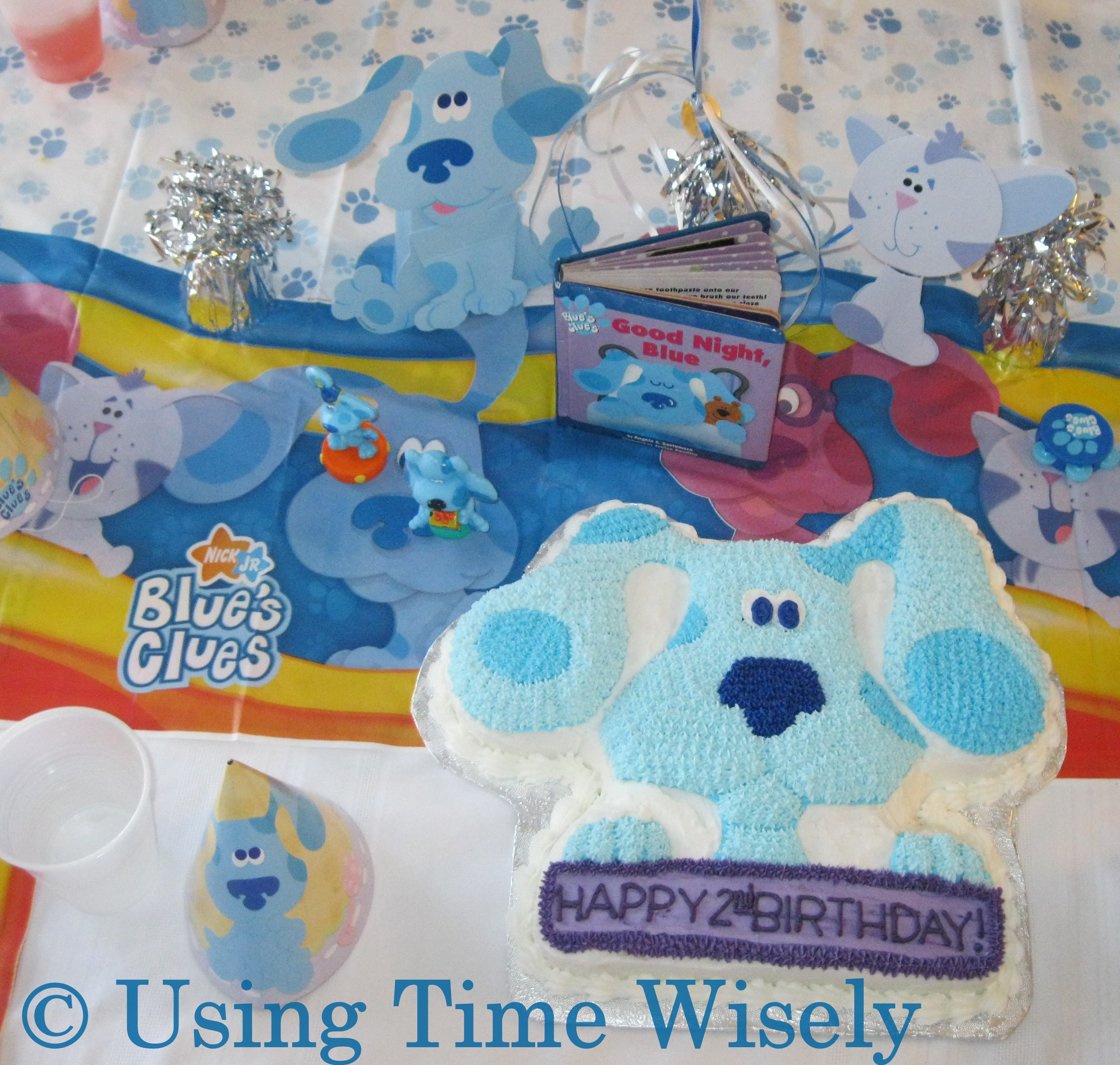
For my toddler’s Blue’s Clues party, we chose a theme and planned an itinerary. On the day of the party, we carried out our plan. I enjoyed the process as my toddler allowed Daddy, grandparents, and siblings to help her. Though the party was not perfectly executed, a bit of spontaneity kept everyone on their toes. 😉

Welcome

Since my toddler cannot turn the door knob on our front door, my son and older daughter opened the door when the guests arrive. My toddler remained down the hall waiting for her guests to come see her.

Games – Part 1 of 3

Blue’s Clues

After our guests arrived and had a few minutes to play, we began the game of Blue’s Clues. For our party, Blue was looking forward to something at this birthday party, and she left 3 clues to help us figure out Blue’s Clues.

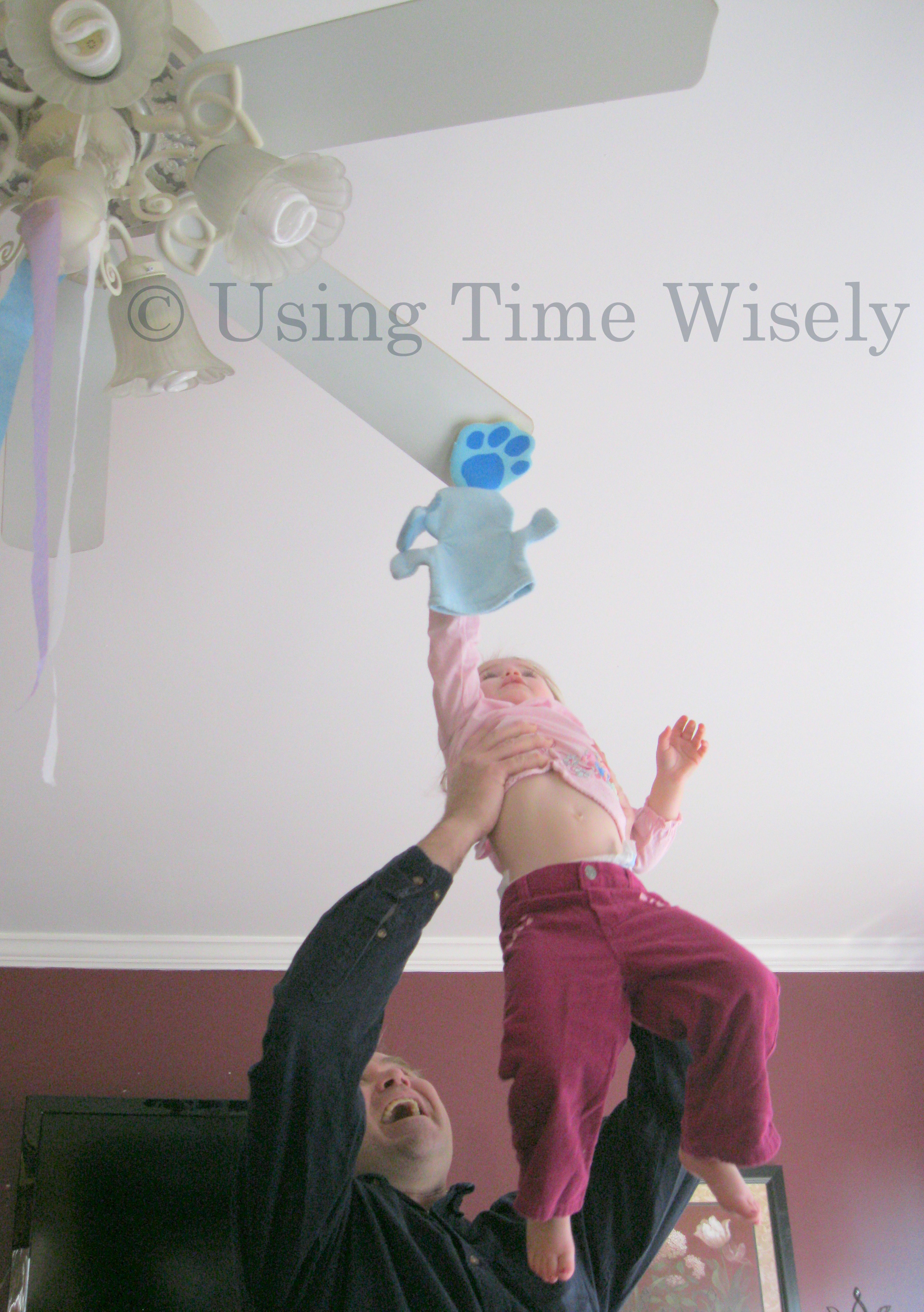
The 6 children then began searching for Blue’s Clues. (We hid one clue at a time to avoid finding them out of order. During setup, Paul placed the first clue. Though I could have cut the clues out of paper, I just used the clues from her Halloween outfit since they were nice and big.)

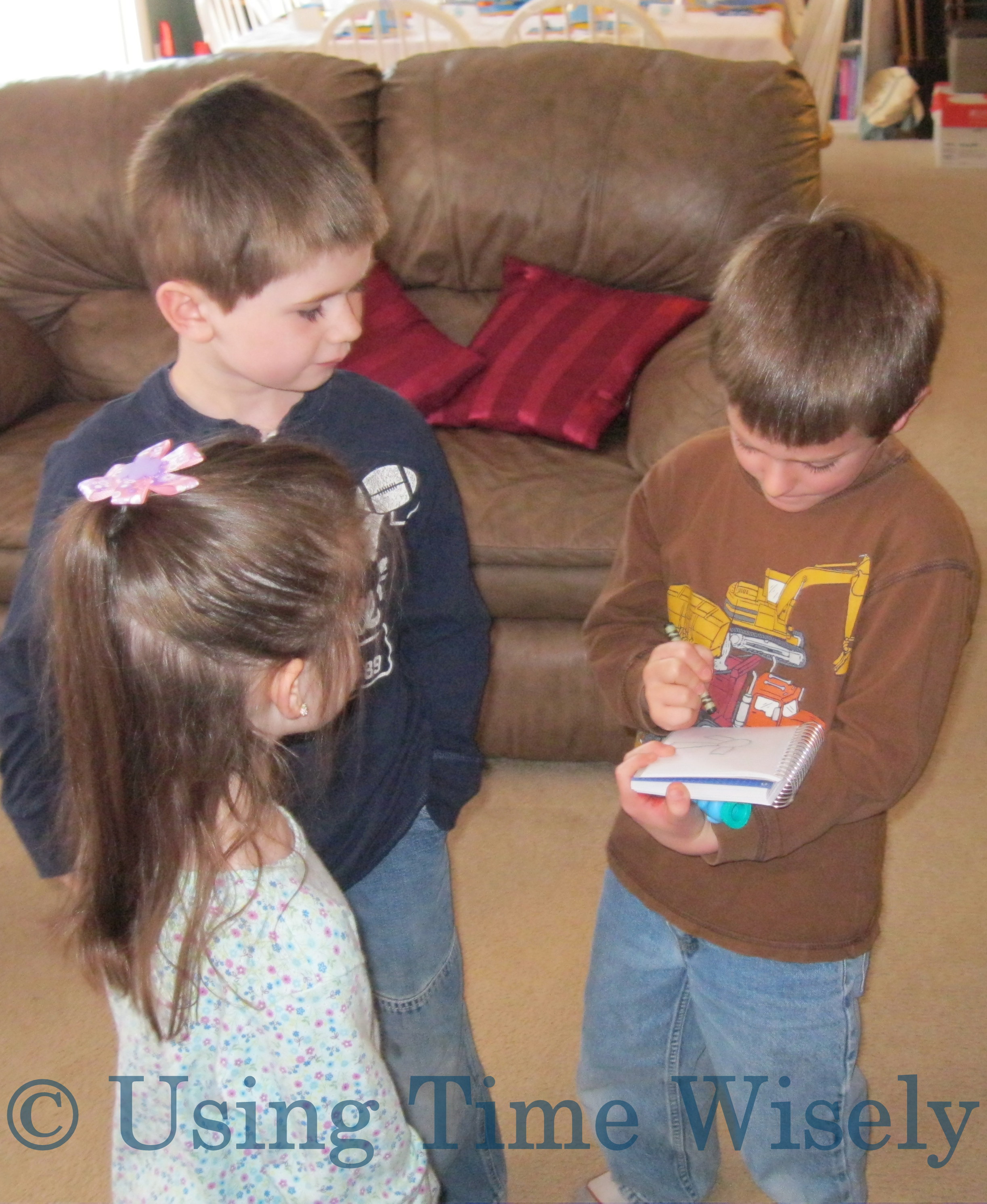
The birthday girl found the first clue on the living room ceiling fan. It was really cute. The older children took turns drawing the clue in our handy-dandy notebook.

Hide and Seek Blue

During setup, I hid 6 Blue’s Clues items (2 figurines, 2 stuffed animals, and 2 bath mitts). With the 6 children paired up, the two 6-year-olds searched for the figurines while the two 4-year-olds and two 2-year-olds looked for the stuffed animals and bath mitts. Each child found one item. How cute it was to watch the older ones help the younger ones after finding their own.

Lunch

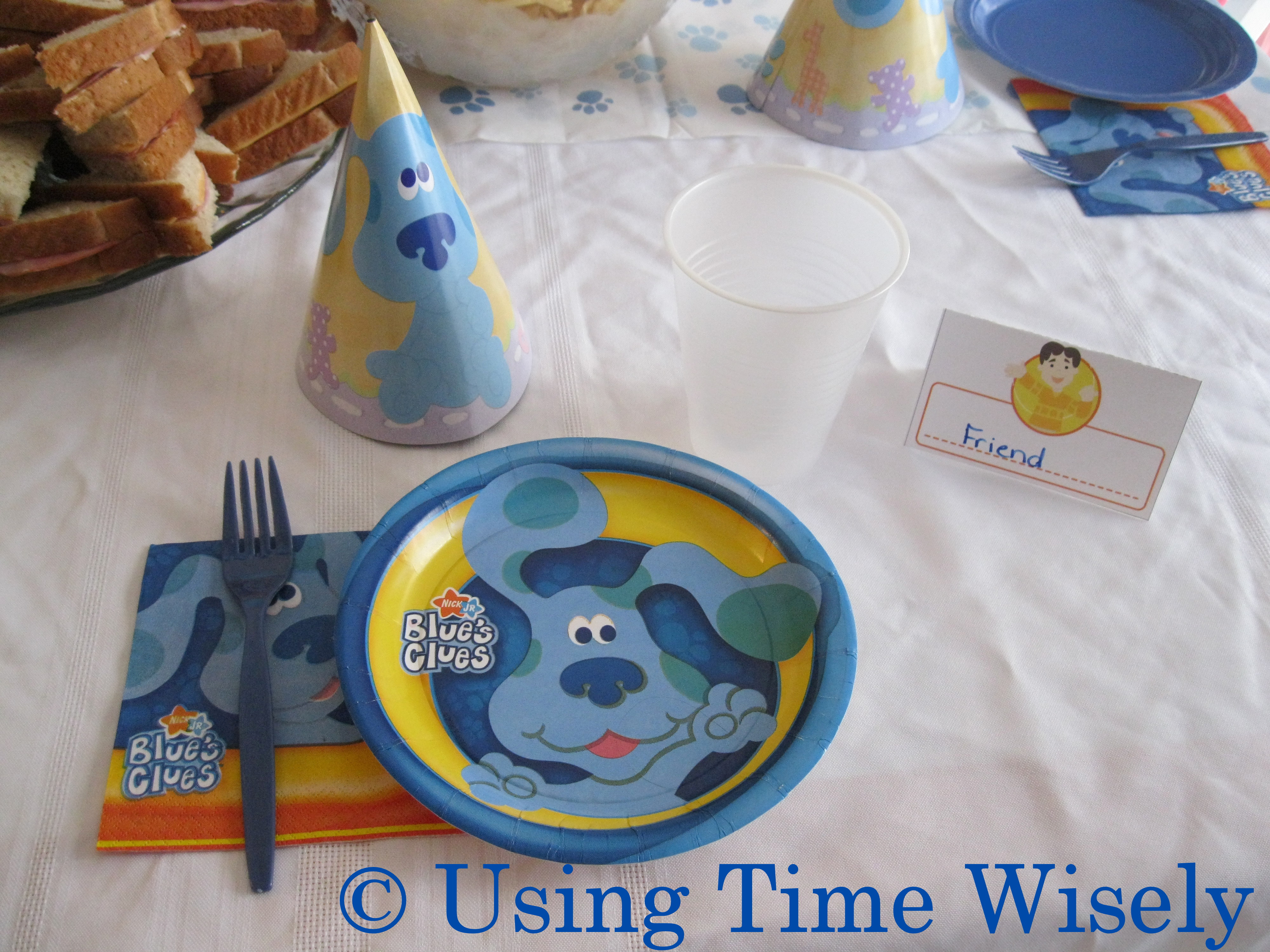
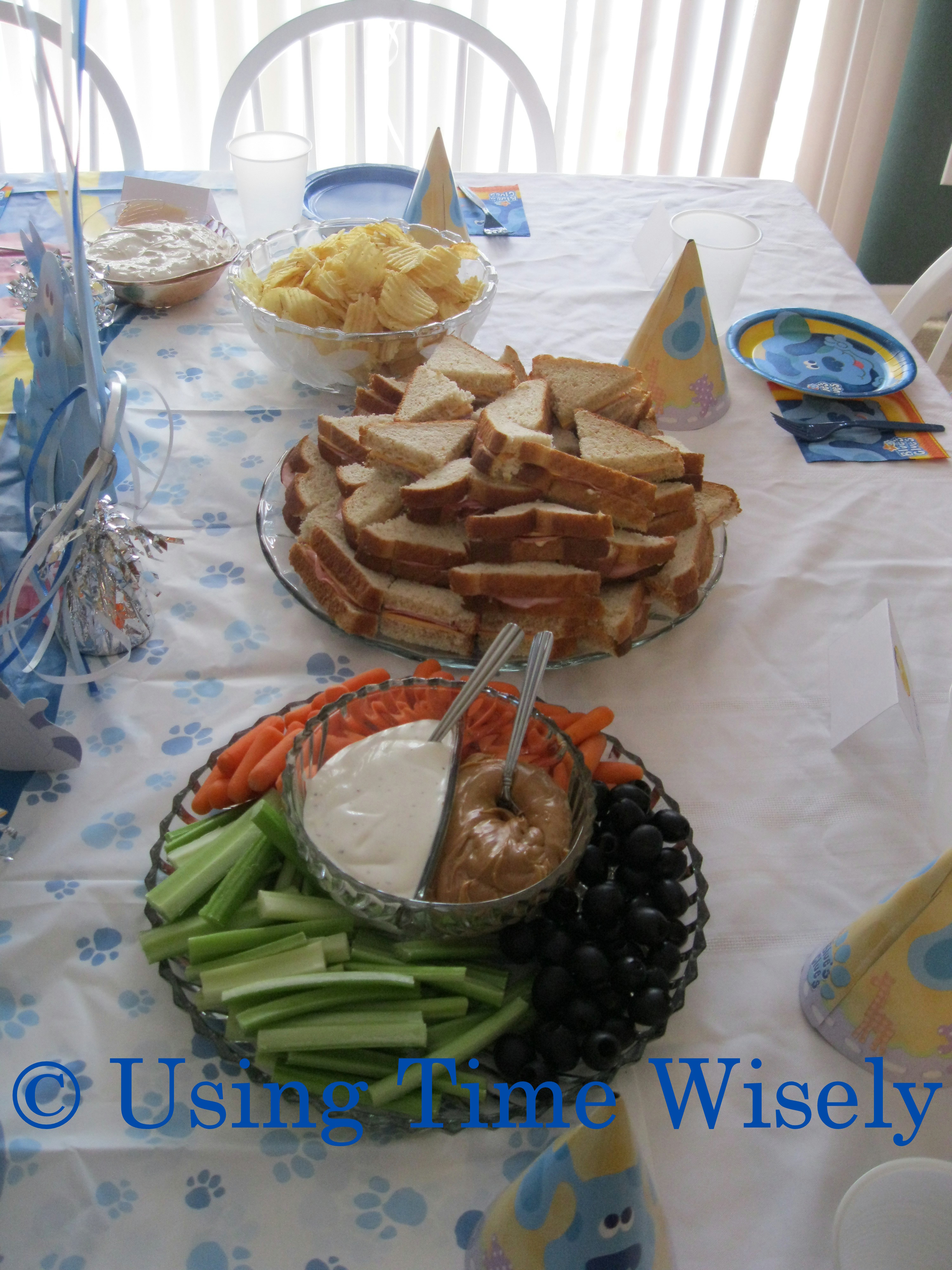
With our party beginning at 10:00 a.m. and the younger children used to eating lunch around 11:00 a.m., I tried to keep them on schedule. The children found their seats at the table, set with tableware, silverware, and place cards, while the parents served the food.


While the children ate at the table, the adults filled their plates and ate in the living room.

Games – Part 2 of 3

Pin the Paw on Blue

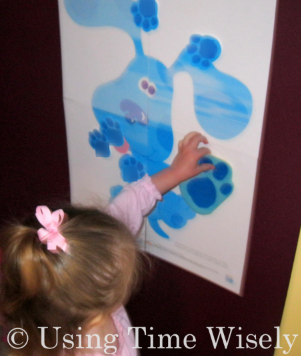
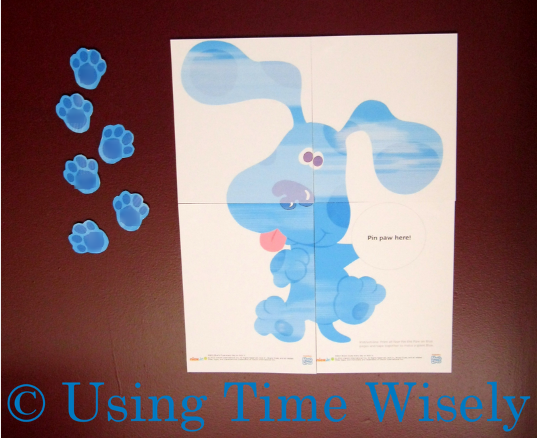
After lunch, we played the Blue’s Clues version of Pin the Tail on the Donkey. The older children were blindfolded, but the younger ones just closed their eyes or placed the paw on Blue. 😉


Open Presents

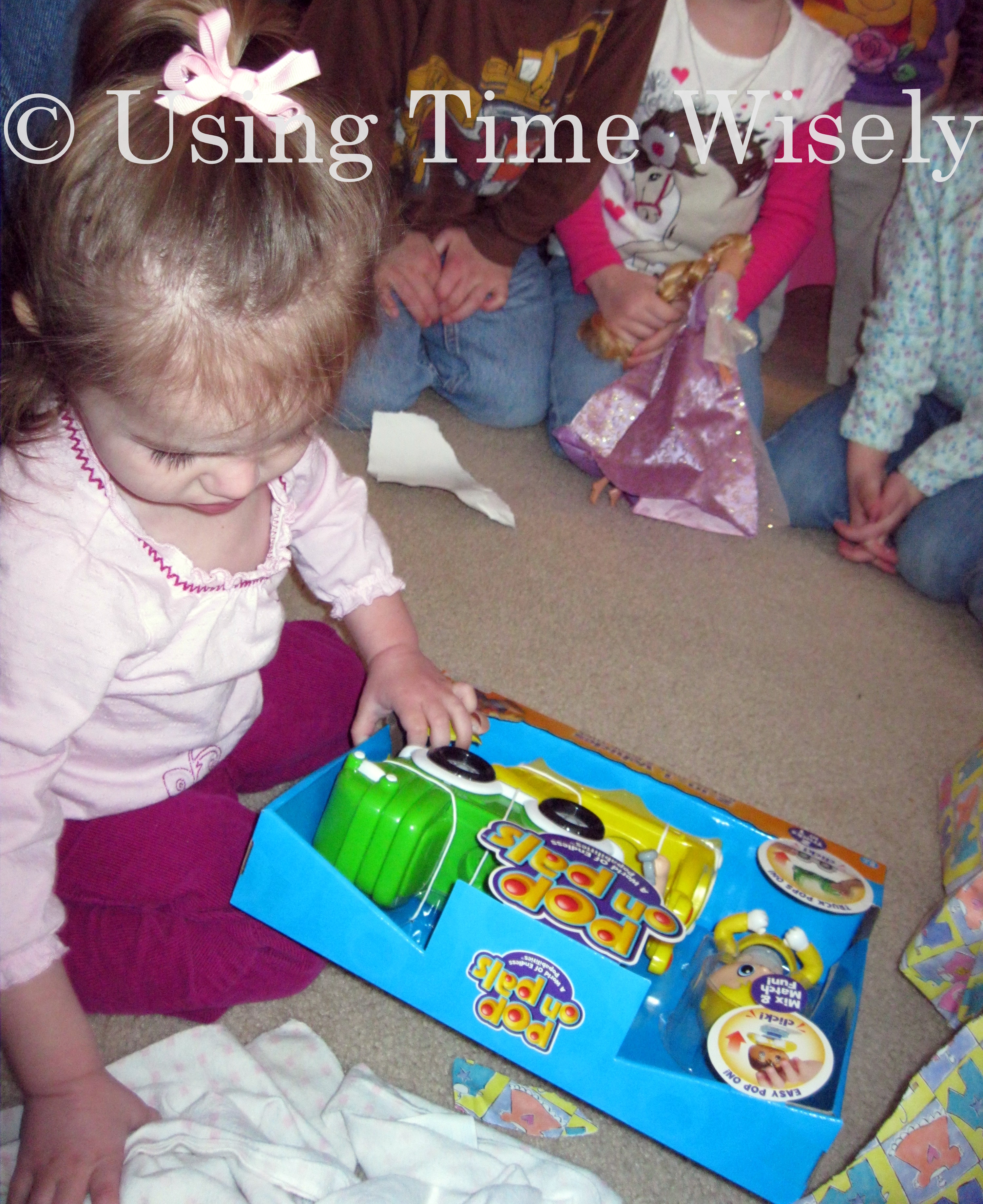
The children all sat on the living room floor and waited for the birthday girl to open her gifts. Sometimes opening the presents is the hardest part with keeping the children back to removing the toys from the packaging to the commotion.

However, this gift opening session went very well. While the grandpas removed the toys from their packaging, we continued with our games.

Games – Part 3 of 3

Blue’s Clues

During lunch, I placed the second paw print on my daughter’s portrait. When the participants found it, we drew the clue into our handy-dandy notebook.

While drawing the second clue, Paul placed the third clue on a candle. The guests quickly found the third clue, added it to our handy-dandy notebook, and deciphered Blue’s Clues. Blue was ready for the birthday girl to blow out her candle.

Sing, Blow Candle, and Cake

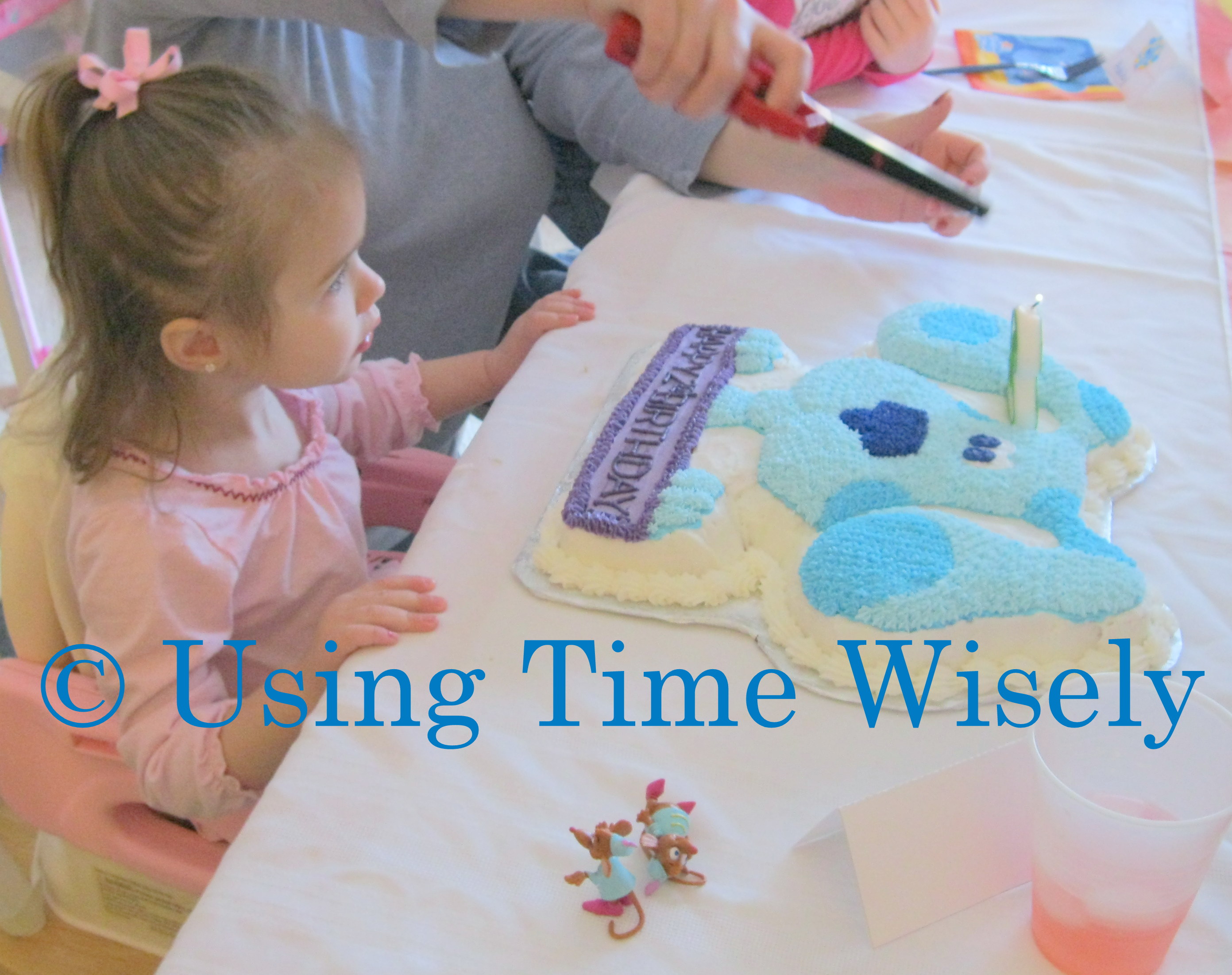
After singing, my daughter blew out her candle (with help), and we served cake at the table with the children sitting in their lunch seating arrangement.


Thank you and Goody Bags

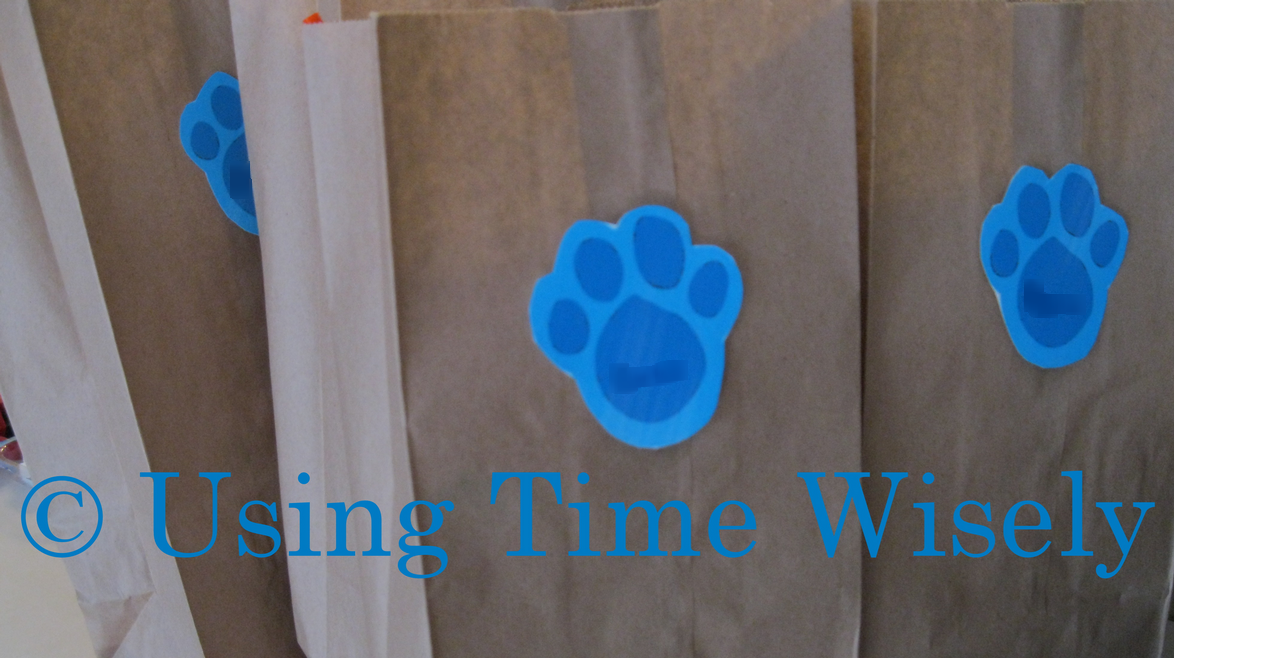
As the children finished their dessert, they went to play. My daughter then distributed the goody bags, made from brown paper bags with a paw print and a guest’s name on the front. The goodies included: blowouts, straws, flying disks, jewelry (girls) and action figures (boys).

Play with new toys and goody bag items

The participants finished the party by checking out the new toys and their goody bags. Throughout that morning, they enjoyed playing with each other while celebrating my daughter’s second birthday.

With an itinerary in place, I followed the plan to keep the party moving and to remind myself when to hide the clues and what activity to complete next. The party was fun for all and wore out our toddler. Upon telling her friends goodbye, she got her blanket and crawled upstairs. She was ready for her nap. 🙂

When planning birthday parties, I consider the theme, plan an itinerary, and enjoy the execution. Happy planning!

Question: Does your child like or avoid the attention at his/her birthday party?

Filed Under: Event Planning, Coordinating, Birthday Party Tagged With: Birthday party

« Previous Page
Next Page »

Welcome to Using Time Wisely!


Presenting organizational tips and tricks to save you money, energy, and time.

To access 5 Ways to Using Time Wisely Today, click "like" on my facebook page and join in on the journey of Using Time Wisely.

Looking for something?

Email Newsletter

Sign up to receive email updates and to hear what's going on with us!

Copyright © 2026 · Lifestyle Pro Theme on Genesis Framework · WordPress · Log in