• Home
  • About Tracy
  • Contact Me

Using Time Wisely

Organized to save money, energy, and time

  • Email
  • Facebook
  • Pinterest
  • RSS
  • Twitter
  • YouTube
  • Document Organization
    • Overview
    • Box 1
      • Credit Report/Cards
        • Credit Reports
          • Credit Updates
          • Credit Scores
        • Credit Cards
      • Personal
      • Home Ownership
      • Vehicles
    • Box 2
      • Life Insurance
      • Major Medical
      • Tax-Favored Programs
      • Prescriptions
      • Dental & Vision
      • Special Health Policies
      • Short-term Disability
      • Long-term Disability
      • Personal Insurance
    • Box 3
      • Social Security Documents
      • Retirement
      • Investments
      • Estate Planning
      • Tax Records
  • Household
    • Cleaning
    • Maintaining
    • Organizing
    • Scheduling
      • Laundry
  • Event Planning
    • Assisting
    • Attending
    • Coordinating
      • Birthday Party
      • Christmas
      • Dinner Party
      • Fall Festival
      • Field Trip
      • Lemonade Stand
      • Thanksgiving
    • Learning
    • Preparing
    • Serving
  • Miscellaneous
    • Communication
      • Customer Service
      • E-mail
      • RSS Feed Reader
    • Goals
    • Organization
    • Time Management
      • To Do List
  • Food
    • Food Prep
    • Grocery Shopping
      • Lists
      • Pricing
    • Menu Planning
    • Recipes
    • Stockpile
  • Family Activities
    • Going Out
      • Free Outings
      • Inexpensive Outings
      • Summer
    • Rewards
      • Good Grades
      • Reading
      • Summer Reading
    • Staying at Home
  • Stretching Your Dollars
    • Daily Deals
      • Groupon
      • LivingSocial
    • Drugstores
      • CVS
    • Gas Prices
    • Gifts
    • On-line Shopping
    • Pictures
    • Products
    • Restaurants
    • School Items
    • Tips
You are here: Home / Archives for Event Planning

Garage Sale: Gathering Items to Sell

January 31, 2012 by Tracy

The past two years, our family has participated in our subdivision’s community garage sale. Though I do not always have items to sell, my children enjoy running their lemonade and cookie stand. 😉

This spring, I plan to actively participate in the garage sale. While in the preliminary stages, I am accumulating items from decluttering, cleaning, and organizing our home.

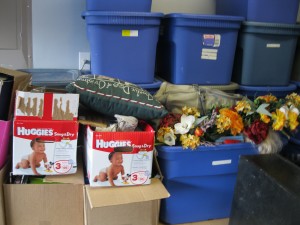
As I work through each room, I keep items we use and love. The other items meet one of the following fates:

  1. Trash any broken items.
  2. Reuse the items in another space/room.
  3. Give the items to a friend who needs it.
  4. Place it in the garage sale box.
  5. Donate to a needy ministry.

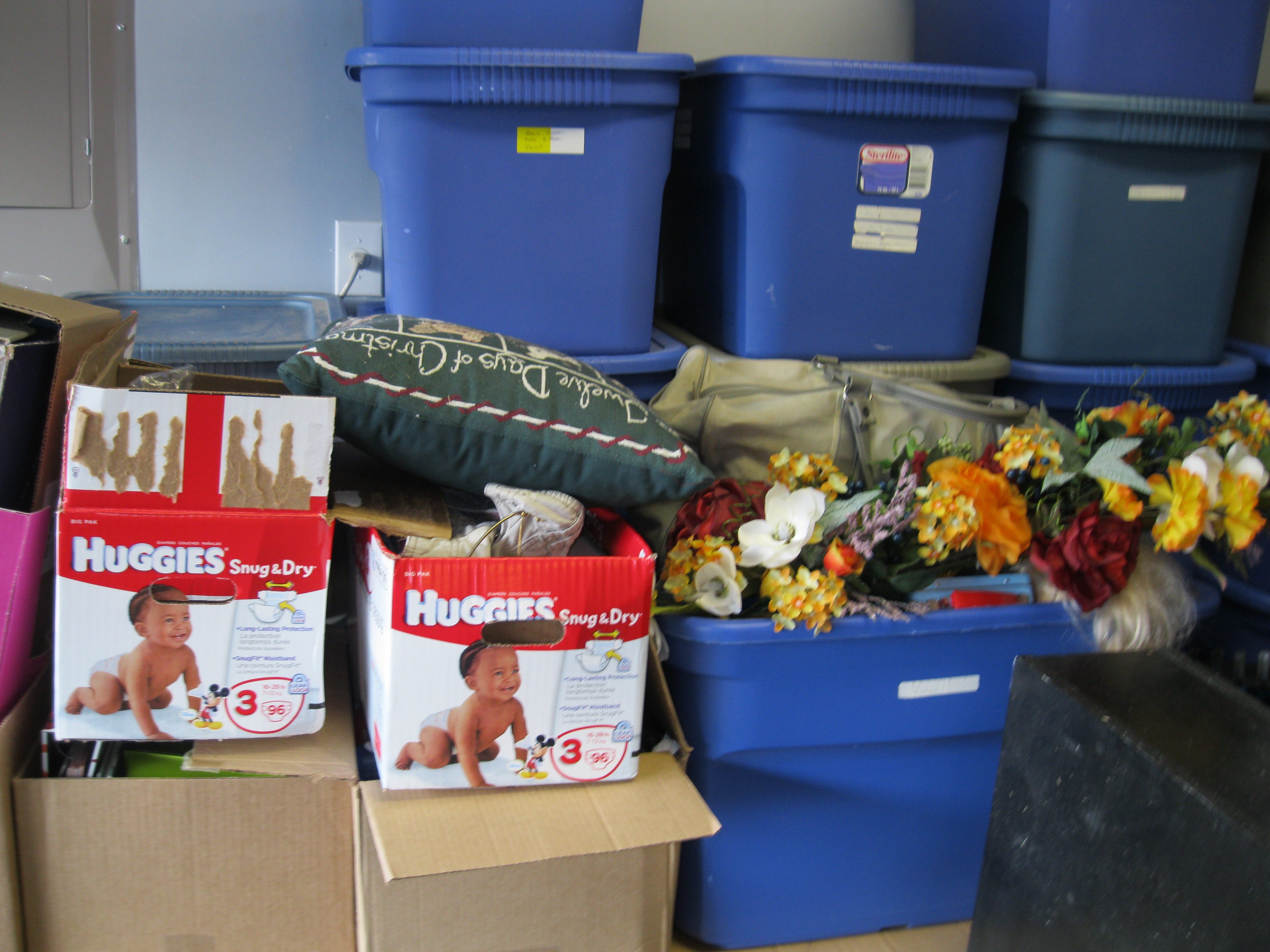
With the box(es) of items to sell, I place them in my garage, which is the holding place until our garage sale. These items are not placed in any particular order.
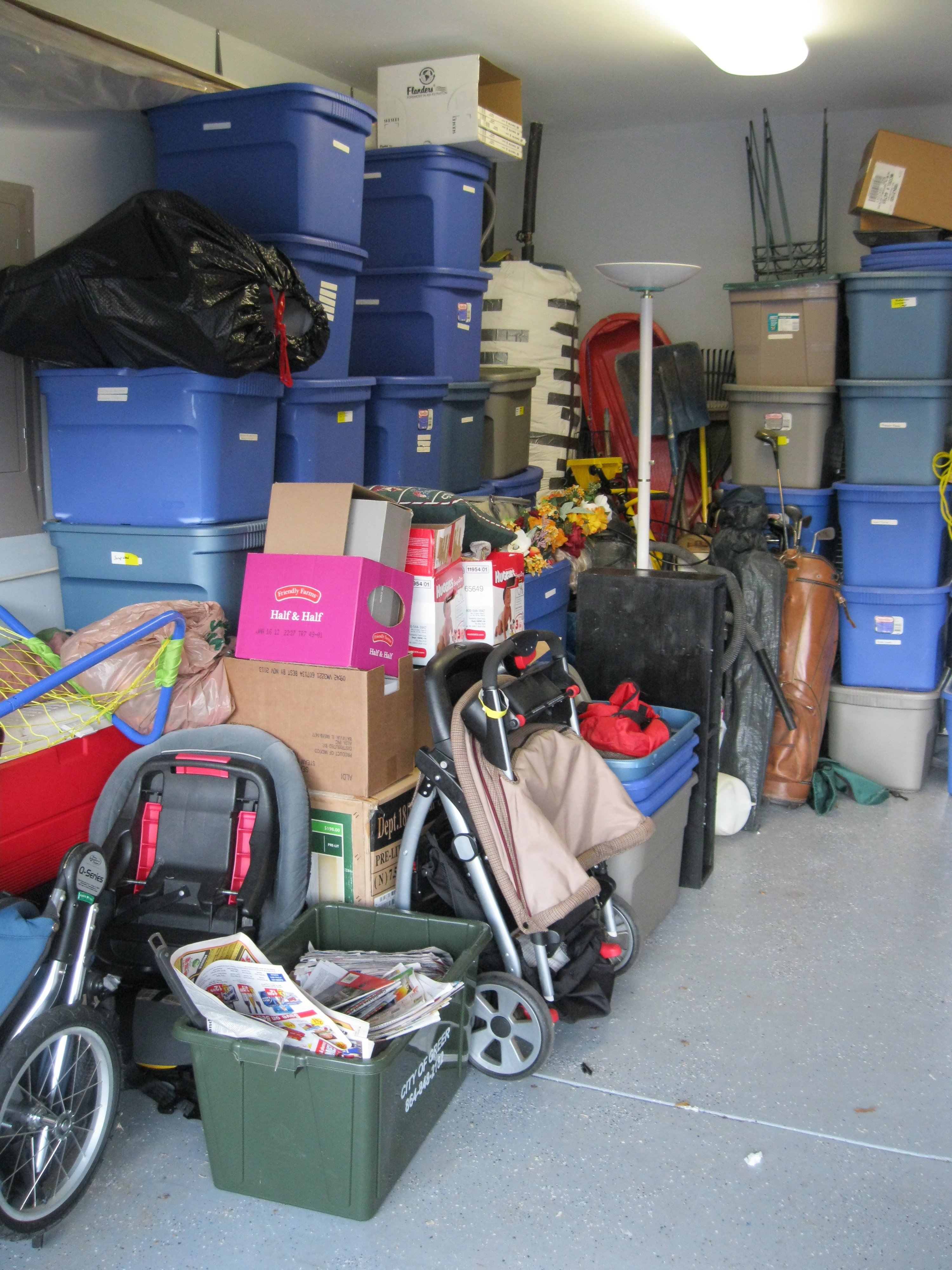
They are just packed neatly into the boxes and stored in the garage. As the date of the garage approaches, I will price and organize the items while using time wisely.

If you are planning a garage sale, designate a place to put your items to sell. If the items are out of sight, you will forget about them since you really do not need those items anyway. 😉 Happy planning!
Filed Under: Garage Sale, Event Planning, Coordinating Tagged With: garage sale

Christmas Program: Directing a Children’s Play – Part 3 of 3

January 24, 2012 by Tracy

Any successful event begins with planning. The larger the event, the more planning needed to pull it off.

With a play, I spend two-thirds of my time planning all the details before the cast enters the rehearsal space. Knowing the framework helps me progress through rehearsals while using time wisely.

In part 1, planning the script, set, and properties forms the outward framework for the production. Then in part 2, developing the cast and crew, costumes and lighting conform to the framework for a cohesive whole.

After planning for so long, the time comes to execute those plans in rehearsals, through the program notes, and presented at the performance.

Rehearsals

With this performance, the action switched from the modern family to the traditional manager scene characters. Since all the practices occurred during school hours, I chose to work with either the modern family actors or the traditional manager scene characters up until performance week. During these rehearsals, we worked on the following:

Blocking. These are the entrances, exits, and movements on stage. By walking through the path they travel as they communicate their lines, the actors become more comfortable with their parts and confidence builds.

Line Interpretation. Assisting actors with attitude, understanding, and pronunciation of difficult words guides them to effectively communicate the script.

Characterization. Teaching the Wise Men to stand up straight while the Donkey should slump his shoulders due to his heavy burden is part of creating a character. Each actor is unique and brings a flavor to that character’s part. Encouraging play and experimenting results in some fabulous outcomes.

Motivation. Giving the actors the purpose behind their line prods them in the conflict, contrast, or amusement. Keeping the actors motivated in their communication brings intensity to an otherwise static performance.

Projection. In our performance space, we do not use microphones. To encourage the children to project their voices, I spend a full rehearsal concentrating on speaking to the ball field on the other side of the parking lot. Without screaming, the students work to increase their performance skills.

Tempo/Timing. Putting it all together with all the actors and the music usually produces many stops and starts. To get the performance to a smooth transitioning point, the tempo/timing rehearsal focuses on the transitions between the scenes. By reminding and guiding the actors, this rehearsal gets the production ready for full run practices.

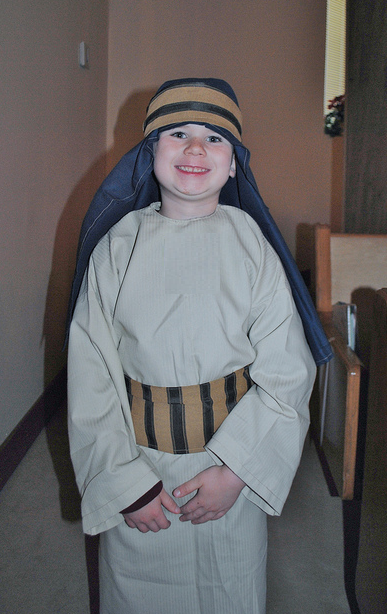
Full Runs. To instill all the elements practiced, the final rehearsals are full runs including a dress rehearsal. Allowing the students to try-on their costumes helps to know where to adjust to accommodate angel wings and shepherd staffs. After these final adjustments, we are ready for performance evening.

Program

Though a program distributed to the attendees on the day of the performance can range from simple to complex, I chose to write director’s notes for the program. By including the scenes and words to the songs for the congregation, the list of cast and crew, and the director’s notes, the program for this production ended up taking 2 full 8.5”x11” sheets of paper. The finished program was a folded 4-page front and back booklet.

Since I enjoy writing the notes and including details for our parents, grandparents, and friends, my programs are lengthy. Some programs are as simple as listing the title and cast and crew. Depending on your time frame and the type of performance, your program length may change from simple to detailed.

Performance

By staying organized with each child’s costume labeled and set at his assigned place in the green room (for this performance the choir room), the children arrived, found their items, and enjoyed taking pictures while preparing for their performance. Knowing their entrances and exits, the cast performed well with seamless transitions.

All the children remembered their lines, their movements, and their properties. The planning resulted in a successful performance proclaiming the miraculous birth of Jesus Christ, the Savior of the world.

Whether you are directing a children’s program, a play for adults, or skits for a birthday party, spending the time planning before entering rehearsal will be using time wisely. Getting the framework in place keeps you focused to execute a successful event. Happy planning!

Question: What event is on your horizon? Please add your answer to the comments.

Filed Under: Christmas, Event Planning, Coordinating Tagged With: Christmas

Christmas Program: Directing a Children’s Play – Part 2 of 3

January 17, 2012 by Tracy

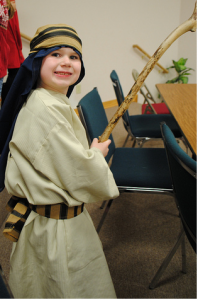
My son - Shepherd 2 posing with his staff 😉

Directing a program can overwhelm. In arranging the details and giving instructions, support an atmosphere of calm.

Even with preparing in advance, I still get bombarded with questions and suggestions that did not cross my mind.

Knowing my framework assists me in fielding these questions and deciding to add, remove, or change a previous choice.

Last week, I shared my planning process for directing the children’s play for my son’s school Christmas program where two-thirds of the process is planning.

The first third, covered in Part 1, focused on the script, set, and properties. Upon gaining momentum with the framework in place, I move to the second third of the planning process, the cast and crew, costumes, and lighting.

Cast and Crew

Though thought-out and working on paper, you need people to execute, put feet to your plan. Recognizing  your limitations and your strengths can guide you to find a cast and crew to balance you.

For me, working with children is hard. Dealing with the talking, wiggling, giggling, and goofing-off distracts others and wastes time. To keep myself focused, I plan extra help during rehearsals to handle these distractions. With this extra aid, I make progress while using time wisely.

The cast and crew for this production included the following:

      • The student actors
      • Playwrights
      • Adaptors
      • Director
      • Choir directors
      • Costume Engineer
      • Lighting Engineer
      • Pianist
      • Parent Volunteers

The Cast

The cast received assigned parts for this production. Via e-mail, parents responded if their child wanted an acting part. From the feedback received, I (with help) assigned the actors to a part.

The actors received their scripts before Thanksgiving break. With the extra time, most of the actors had their lines memorized during the first week of rehearsal.

The Crew

Comprised of parent volunteers, the crew helped pin sticky notes with children’s names on costumes, brought in items for our set, and assisted with crowd control during rehearsals. By never turning away help, I kept a list of To-Do items. When asked if I needed help, I had an answer.

With the cast and crew chosen, I began working with the costume engineer.

Costumes

The mom who helps as the costume engineer is fantastic. She brings creativity and energy to the project. With a list in hand, she and I sort through the school’s costumes. Placing the garments, head pieces, and sashes together, we make notes of items we are missing.

Then we borrowed, made, or purchased more items for the cast members. Adjustments to the hems,  fasteners, and accessories came after the actors’ fittings. But getting organized early and planning for dress rehearsal gets us closer to a successful performance.

Lighting

Though limited in lighting options, I chose to create a simple light plot with 6 cues. Working in a church auditorium with groups of lights controlled by one switch gets tricky. No matter what the limitations, you can still make the most of the situation. My lighting design will not win any awards. However, the simple design creatively followed the action.

With the cast and crew, the costumes, and the lighting design chosen, the framework is complete. This framework is the road map to get from start to finish. The last step is executing this plan, covered next week in Part 3.

In planning your next event, ask for help. While planning and executing, you will have a friend along with whom to interact, laugh, and share. Enjoy the calm of the event by using time wisely to organize. Happy planning!

Question: How often do you ask for help when planning an event? Please add your answer to the comments.

Filed Under: Christmas, Coordinating, Event Planning Tagged With: Christmas

Christmas Program: Directing a Children’s Play – Part 1 of 3

January 10, 2012 by Tracy

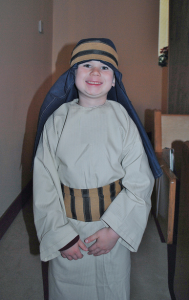
My son - Shepherd 2 🙂

In the next three weeks, I will share the process and results of directing the children’s Christmas program at my son’s school. When I first mentioned this project, posted in My Upcoming 2011-2012 Events, I was scheduling time to read and search for a script.

Often, finding the content is the most time-consuming part of the event. Preparing a solid foundation and framework provides a home for the “guts” of the event. Since the details fall into place with a set structure, I focused two-thirds of my time on preparing for the program before rehearsals began.

My planning process for this free Christmas children’s program followed this progression:

Part 1 – Script, Set, Properties

Part 2 – Cast and Crew, Costumes, and Lighting

Part 3 – Rehearsals, Program, and Performance

Script

Finding a Christmas program that meets my criteria takes a few weeks. I spent about thirty minutes each day for over a week reading print scripts and searching online. After locating this play that had great form but needed some revisions, I began the approval process through the school and contacted my father-in-law for his assistance in adapting the play. Within a week, the adapted script was in final form with approval from the school. Yeah!

After formatting the script into scenes and adding in Christmas carols, I created the cast of characters page listing all the characters for which I needed actors. (Note: Most programs come with the cast of character’s page. However, the free program I used did not have this information included.)

With the revised script and prefatory pages complete, I was ready to prepare for the performance.

Set

With the script complete, I began sketching a preliminary set for our production. Knowing the entrances and exit options for our auditorium, I took pencil and paper and drew different sized boxes for the elements needed in the script. For example, the box representing the couch was longer than the box illustrating the benches for the church pews.

I then read the script from beginning to end mapping out the blocking (traffic patterns of the actors) making sure there were no conflicts.

When the plan worked, I compiled a list of items I needed to create the set.

Properties

Also known as props, the properties are the items used by actors throughout the program. From a magazine to a mortar and pestle, I added to the set list all the properties I needed to aid the actors in communicating the gospel message.

With the prop list complete with all the items needed for this production, I was ready for the next phase.

After planning the script, set design, and properties, I was ready to execute these plans with help. The next phase of preparation for the Christmas program required a crew (helpers to carry out the plan). Next week, I will share the cast and crew, costumes, and lighting developments.

This process takes time and preparation, but with the proper foundation, all the details come together. Are there changes? Absolutely! The changes can be made easily because you know the framework and can adjust within that framework.

Whether you are directing a children’s program, hosting a birthday party, or entertaining friends, planning will take you from beginning to end. If you don’t have a framework, then you will continue to make adjustments, and your participants will get confused. For any successful event, the key is using time wisely  to organize. Happy planning!

Filed Under: Christmas, Event Planning, Coordinating Tagged With: Christmas

Fall Festival: Recap Meeting

January 3, 2012 by Tracy

Photograph Credit: Flickr (Caston Corporate)

Before planning the events of 2012, I want to take a few posts to complete the events from 2011. In revealing my upcoming events in 2011-2012 post, I highlighted three events. Having completed the fall festival, I promised more information on how to better plan for next year, then came Thanksgiving, Christmas, and the Top 10 List.

In getting back on track, I will share what I learned about fall festival and how I plan to improve next year.

Successes

Barriers: Enclosing the space kept all the students and children safe and within boundaries. Separating the open play area and the ponies designated a natural entrance to the pony rides within the KidZone. This arrangement worked so well.

Bounce Houses: Increased number from 2 to 5 this year. The lines were manageable and moved quickly. Having totes for shoes, outdoor mats, and canopies at each entrance kept the area clear, clean, and shaded.

Police Officer: Keeping watch over the entrances and wooded area around the KidZone, the police officer oversaw the safety of our event. Having him available during money exchanges and changing of the volunteers was extremely helpful in keeping our event safe.

Stage Performances: With performances beginning every half hour, the KidZone stayed alive during the full event. Having the hay bales for seating gave the stage an automatic audience. The placement worked well in the center of the area, and the juggling and karate demonstrations were well-received.

Volunteers: This event would not be possible without the many volunteers. In KidZone alone, I worked with over 50 volunteers throughout the day. Asking community organizations to help with our event allowed our staff and parents to oversee the details.

The event was definitely a success without any major problems. However, there are always those unexpected items to improve next year.

Improvements

Audio: Add speakers and microphone to area for announcements and stage area. We had no way to get information to those in the KidZone. For safety, we need to have audio for next year.

Advertising: KidZone flyers distributed at the entrances than ignored at the KidZone registration table.

A source of frustration: I spent a good 2-3 hours designing a half-sheet flyer with a map and details about the Kidzone. Volunteers were scheduled to distribute these flyers at the KidZone entrance.

When a few volunteers failed to arrive, I adjusted responsibilities. Unfortunately, the flyer distribution suffered, and I found the stack of flyers in a box after the event. Though it was a source of frustration, I have the template for next year. (Looking on the bright side. :-))

Giant Slide: Need a more advanced slide next year. The younger children had lots of activities while the older students missed the giant slide. There was miscommunication with the contract. The e-mail indicated the large slide would be delivered, but we received a small one. Next year, I will be more proactive with the bounce house contracts and contacts.

Cleanup: The most frustrating part of the event was cleanup. The new crew came in with gusto. In an effort to help, they cleared everything out, stacked remaining items in storage, and left.

I ended up coming back on Monday morning to sort through all the KidZone items. Finding coolers filled with floating leftover water bottles, totes with soiled paper towels, and missing items was not pleasant. Knowing that tearing down will be quick and immediate, I need to better prepare next year.

I may try to choose one area where all the KidZone items stay until I can go through the items. By the end of the event, I hit an energy low. Dealing with cleanup was hard to swallow.

After each major event, I like to take a week to decompress and take a step back to view the big picture. With a little break, I can better rate the details to find the successes and failures. By writing down these observations and finding solutions, I bring these notes to the recap meeting for my report.

The recap meeting for this event was long, but lots of suggestions given to consider for improving our event for next year. In using time wisely, I celebrated the successes, learned from the unexpected surprises, and enjoyed the process.

Question: What helps you improve your events? Please add your comments and suggestions.

Filed Under: Event Planning, Coordinating, Learning, Fall Festival Tagged With: fall festival

« Previous Page
Next Page »

Welcome to Using Time Wisely!


Presenting organizational tips and tricks to save you money, energy, and time.

To access 5 Ways to Using Time Wisely Today, click "like" on my facebook page and join in on the journey of Using Time Wisely.

Looking for something?

Email Newsletter

Sign up to receive email updates and to hear what's going on with us!

Copyright © 2026 ¡ Lifestyle Pro Theme on Genesis Framework ¡ WordPress ¡ Log in